Syeda Ahmad, Hampshire
In 1964, Malcolm X performed Hajj. In a letter he wrote from Mecca afterwards, he noted his bewilderment: ‘There were tens of thousands of pilgrims from all over the world. They were of all colors, from blue-eyed blonds to black skin Africans. But we were all participating in the same rituals, displaying a spirit of unity and brotherhood that my experiences in America had led me to believe never could exist between white and non-white. […] You may be shocked by these words coming from me.’
Shocked, they may well have been. A century after the abolishment of slavery, in 20th century America, Black Americans remained disenfranchised and perniciously discriminated against. Jim Crow laws — which mandated the separation of Black and white people in all public facilities, including transport, schools, parks and restaurants — were still in place across the South. Malcolm X was a civil rights activist and one of the most well known members of the Nation of Islam, a Black nationalist organisation that viewed white people, after centuries of oppressing the Black population, as beyond redemption and unworthy of mixing with. Instead, they advocated for racial separatism.
Hajj shattered X’s worldview. Having ‘eaten from the same plate, drunk from the same glass, and slept in the same bed, (or on the same rug) — while praying to the same God — with fellow Muslims, whose eyes were the bluest of blue, whose hair was the blondest of blond, and whose skin was the whitest of white,’ he began to believe in a future of human unity, where racial distinctions could be erased, in accordance with the true teachings of Islam.
These teachings are simple and comprehensive and, perhaps, easier to understand than they are to inculcate. Chapter 49, verse 14 of the Holy Quran states: ‘O mankind, We have created you from a male and female; and We have made you into clans and tribes that you may recognise one another. Verily, the most honourable among you, in the sight of Allah, is he who is the most righteous among you. Surely, Allah is All-knowing, All-Aware.’ The Holy Prophet (may peace and blessings of Allah be on him) famously said in his final address to the Muslims, a short time before his death, ‘An Arab possesses no superiority over a non-Arab, nor does a non-Arab over an Arab. […] The most honoured among you in the sight of God is the one who is most righteous.’ In his commentary of the Quranic verse 49:14 His Holiness Hazrat Mirza Bashir-ud-Deen Mahmood Ahmad summarised Islamic teachings succinctly: ‘The whole human race is but one family.’
Most of us would emphatically attest to our belief in these teachings, but I imagine the number of us who are able to put them into practice is smaller. It can be difficult to recognise yourself in someone who looks nothing like you and speaks a completely different language. It can be hard to let go of tribalism and to stop seeking comfort in similarity. It can be harder still to forgive the prejudices of others, and imagine a future in which the oppressor and the oppressed may embrace one another as equals.
But this is the kind of thinking that Islam encourages in a believer. Islam insists that followers of the religion expand capacity for empathy, that they become more imaginative in their hopes and ideals, and more ambitious in their quest for goodness. Believers of today face unique challenges in this regard. The creation of the internet, which was supposed to bring humans from around the world closer together, has instead delivered us a constant steam of violence and despair. We are being shown the very worst that humanity is capable of daily, but we are much less frequently reminded of the good that humanity is capable of. Our trust and faith in one another has been eroded, encouraging us to be suspicious of one another, and limiting our ability to show generosity and kindness to strangers.
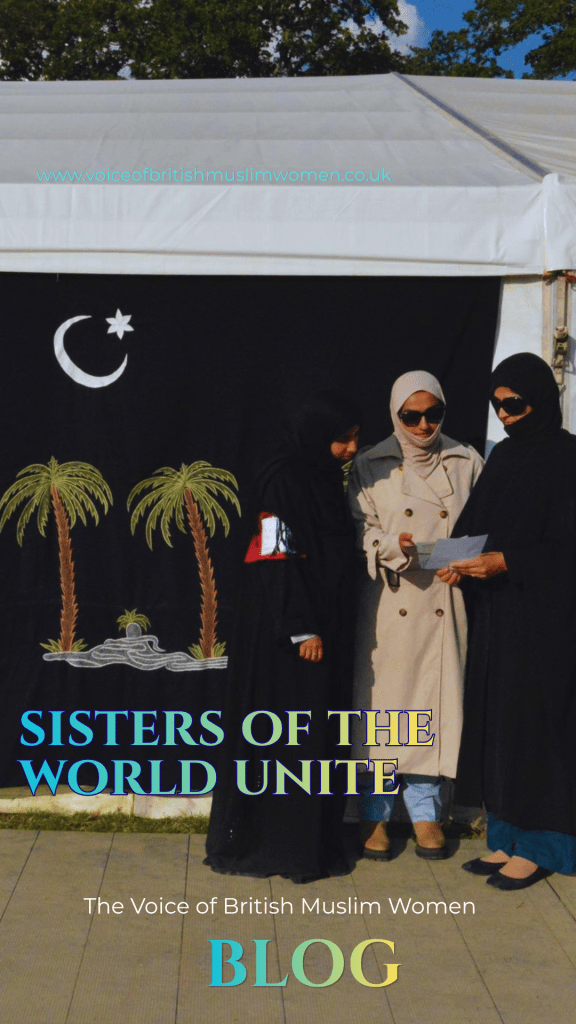
The Jalsa Salana is a unique opportunity for many reasons, but one vital aspect is that it reminds us of how unified mankind can be when making an effort to follow Allah’s teachings. Men and women from starkly different backgrounds come together to organise and run this event. We feed one another, offer prayers for one another, talk to one another. We connect with people of different races, nationalities, ages. We take the same pledge of allegiance in our differing mother tongues. We unite. It is not hard to imagine someone coming to Jalsa and experiencing a shock similar to the one that Malcolm X experienced at Hajj — the shock of seeing humanity fulfil its potential for unity.


Leave a comment