Ayesha Naseem Mirza, Walsall
Knowledge is an interesting concept. It is so vast and unlimited that you can keep going for as long as you like in your pursuit of learning. There is always more to learn. Because of the vastness of this concept, there are many ways in which knowledge is expressed and shared. Some are more widely accepted and considered more reliable than others but the whole purpose of being knowledgeable is that the urge to learn, to explore and to enhance the understanding of the world should not be limited.
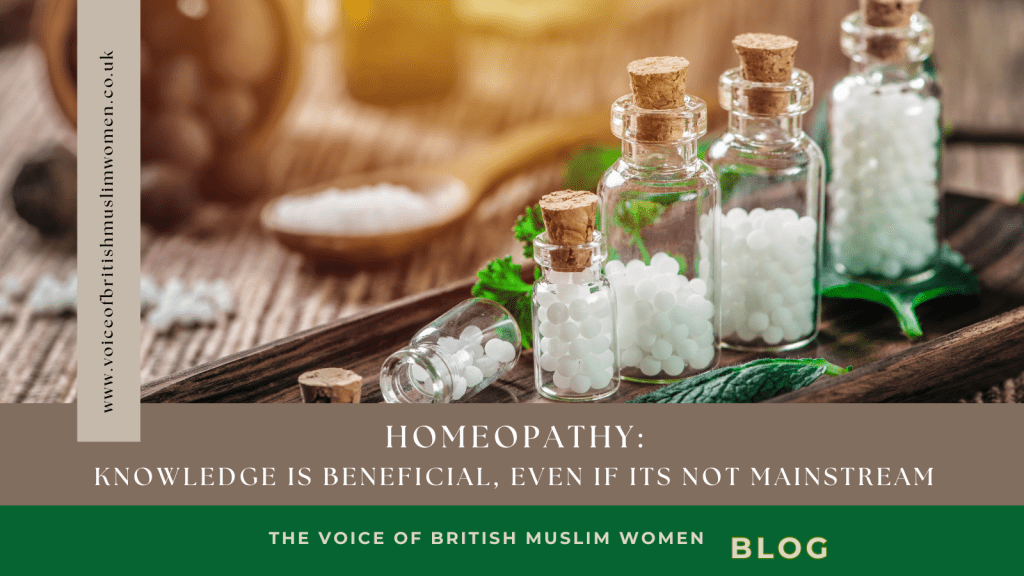
Homeopathy is one such form of knowledge; a very niche area of medicine that is accepted and trusted by many but equally not trusted and unaccepted by others. Founded by Dr. Christian Friedrich Samuel Hahnemann, homeopathy believes ingredients that induce symptoms also trigger the body’s healing system. This alternative form of medicine believes “like cures like.” In other words, the ingredients that cause symptoms of an illness can also cure the same disease.
Homeopathic medicine ingredients include plant, animal, mineral, and synthetic substances, these are usually highly diluted. Mostly, western medicine dismisses the practice of homeopathy but there are documented cases where homeopathic methods have cured people of their disease and it is a type of medicine that continues to be used as a form of treatment by many, typically alongside their main treatments through allopathy.
World Homeopathy Day, which is observed every year on 10th April in memory of its founder, seeks to challenge the understanding and strategies regarding homeopathy that can also support its further development as a form of cure and medicine. According to the Homeopathy Research Institute (HRI), 200 million people around the world use homeopathy regularly. Half of these people are in India where there are 200,000 registered homeopathic doctors, with 12,000 doctors added each year.
His Holiness Mirza Tahir Ahmad, the fourth Caliph and worldwide head of the Ahmadiyya Muslim Community (may Allah have mercy on him) delivered lectures on homeopathy which are now compiled in a book. For seekers of knowledge and for those who are keen to learn, these lectures provide with strong incentive to not only study homeopathy but to pursue ways in which we can derive benefits and use it for the service of mankind – one of our purposes of life as Muslims.
Among all the fields and branches of medicine, homeopathy is the most closely related to the laws of nature and human nature. As Allah the Almighty states in Chapter 30, verse 31 of the Holy Qur’an:
“…And follow the nature made by Allah — the nature in which He has created mankind.”
Therefore, the study of homeopathy is valuable for all those who wish to understand the laws of nature, the principles of healing and the meaning of health and disease.
Moreover, the concept of exploring and trying new means and avenues to help better environment and provide ease for humanity is encouraged in Islam. Knowledge and learning also is boundless and using one’s intellect in understanding the world is of immense significance.
As Allah the Almighty states in Chapter 76, verse 4 of the Holy Qur’an:
“We have shown him the Way, whether he be grateful or ungrateful.”
It is narrated that the Prophet of Allah(peace and blessings of Allah be on him) said: “The word of wisdom is the lost property of a Muslim, so that, wherever he finds it, he should take it, as he is most entitled to it.” (Tirmidhi)
Thus, even if something like homeopathy is not as mainstream or widely accepted, it doesn’t mean it cannot be explored and studied so that we can derive some benefit. Knowledge is always beneficial and we should try all means and should go far and beyond in accessing knowledge so we can do our part in making our world a better place.

 Voice of British Muslim Women
Leave a reply to Fatiha Nadeem Cancel reply