Sameea Jonnud, Aldershot
Ijtema is an annual event where members of the Ahmadiyya Muslim Community join in their separate auxiliaries to learn, compete and socialise with others of their faith. I have been going to the national Lajna and Nasirat Ijtema for as long as I can remember, a fixed event in my diary along with the two Eid Prayers and Jalsa Salana; it’s an event run by and especially for the women and girls of the Ahmadiyya Muslim Community.
My earliest recollection is standing in a white suit and green dupatta (scarf) on the Mahmood Hall stage taking part in the English speech, Tilawat (recitation of the Holy Qur’an) and Quiz competitions at Fazl Mosque. In those days, there were only a few of us in that small hall, which accommodated Lajna and girls from around the country and all competitions took place together. I still remember and see some of the girls or their mothers from that time and it feels as familiar as seeing a family member. Also remembered with love is a neighbouring Lajna who I would visit after school so she could teach me the correct way to recite the Holy Qur’an; my mother’s recitation was fine but she knew that sometimes it’s much more beneficial to learn from someone else, and to this day I still follow the rules of recitation she taught me.
As the years passed and the numbers attending Ijtema increased, it moved to nearby college and sports halls which were better able to accommodate the numbers. By this stage I was attending with my young daughters, sometimes sitting in the crèche where they could remain occupied with games and activities while I listened to the programme. Handicrafts were exhibited bringing splashes of colour to the weekend. It was enjoyable attending with other mothers and their young children and keeping them occupied with colouring books and apples while listening to the competitions.
As my girls grew older, Ijtema time began earlier once again as my daughters took part. Helping them recite the Holy Qur’an enabled me to learn portions, researching speech topics refreshed my knowledge so I found myself improving in many ways. Ijtema also grew and was held now in the whole Baitul Futuh mosque complex or in large marquees in Islamabad. Regional presentations took place, intensively researched topics with accompanying visuals on a big screen. As the world had moved into a more technological age, so did Ijtema. These were accompanied by related exhibitions allowing Lajna to express their knowledge and creativity to produce fascinating pieces of work. Working on these was incredibly rewarding and I found myself gaining knowledge through research, as well as a different fulfilment of working with a team. This is something I and so many others have gained through volunteering in departments such as food serving, cleaning and more.
In following years an addition to the programme was a series of lectures on various topical subjects and scientific displays. We were taught about the night sky and how to grow vegetables, there were fun things to try – a bike ride made us a smoothie, for example. We could learn table decoration or watch talented Lajna bakers compete in decorating cakes in intricate patterns. And there were still traditional academic competitions held with the sound of melodious voices reciting verses of the Holy Qur’an and poems. With the number of marquees and different activities for the thousands of women and girls, Ijtema had become like a mini Jalsa, a feeling strengthened by the addresses of the fifth Caliph/Khalifa and worldwide head of the Ahmadiyya Muslim Community, His Holiness Mirza Masroor Ahmad, May Allah be his Helper. I can recall hearing him tell us of our rights, stories of strong and brave Muslim women of the past, of how we should best live our lives. His words about Jihad of the pen and becoming Umme Amarrahs were instrumental in encouraging me to follow that path, something I still try to do today.
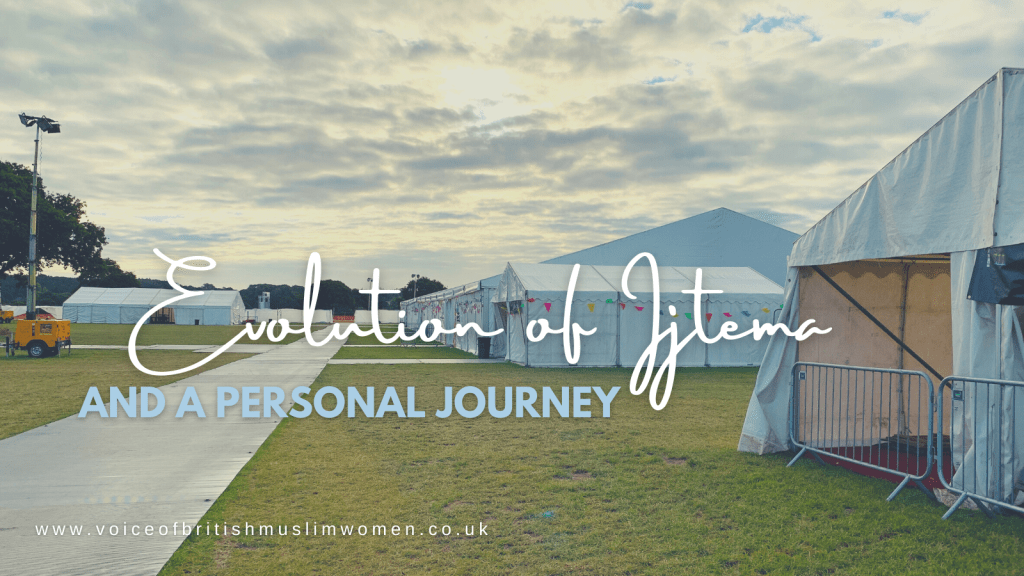
After three years in which one reduced capacity Ijtema took place, this year will see it return to a large scale. Ijtema still teaches us new things and refreshes old, it brings about reunions of friends and familiar faces, comforting feelings which are special to Ijtema. Our national Ijtema has indeed evolved as an event and like many other Ahmadi women, looking back on it I find myself having followed a personal journey of growth and change beside it.


Leave a comment