Education
-
Rizwana Ali, Halesowen The United Nations International Day of Education, observed annually on 24th January, highlights education as a fundamental human right and a vital driver of peace, development, and social progress. Established by the UN General Assembly in 2018, the day draws attention to the millions of children worldwide, particularly girls, who are still…
-
Nooresahar Ahmad, Hampshire There was an anecdote that the late writer Kurt Vonnegut liked to tell. It began with him leaving his home office, a stack of manuscript papers in hand, with the intention of going out to buy a single envelope in which to put them. His wife questioned him as he left: ‘why don’t…
-
Fatiha Nadeem, Bradford September arrives quietly. The air shifts, the days shorten, and the rhythm of life begins to change. For many, it’s the start of a new academic year – whether it be school, college or university. For others, it’s a return to rigid routines after the looseness of summer. But, in reality, September…
-
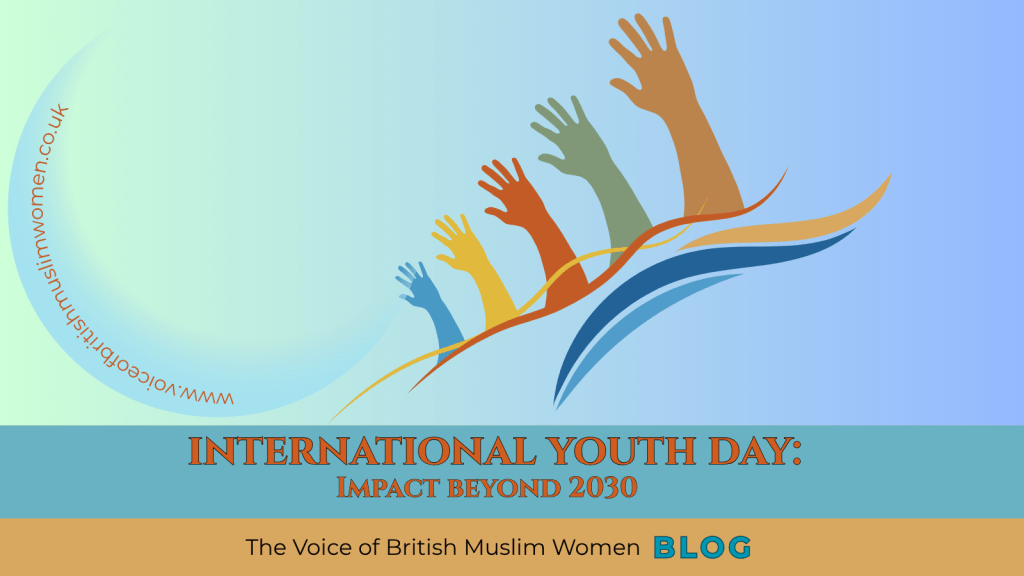
Fatiha Nadeem, Bradford Each year, International Youth Day reminds us of the potential young people hold, with this year’s theme serving as a reminder to the youth to play their role in applying the Sustainable Development Goals set out by the United Nations (UN) in 2015. These goals include No Poverty, Gender Equality, Climate Action…
-
Iffat Mirza Rashid and Ayesha Sabahat On International Day of Education, Iffat Mirza Rashid and Ayesha Sabahat talk about getting back to basics and ensuring education is available to everyone. They point out that Islam has always placed a great importance on women’s education, and show how it has a positive impact on everyone.
-
Iffat Mirza Rashid, Bentley When I saw that it would be International Day of Education on January 24th – not something I was aware of before – I didn’t know that by the time I’d come around to writing this blog post, a ceasefire in Gaza would have been reached by now. The disbelief…
-
Nooresahar Ahmad, Hampshire ‘There was a time,’ wrote Wordsworth (1) of early childhood, ‘when meadow, grove, and stream, / To me did seem / Apparelled in celestial light, / The glory and the freshness of a dream.’ Now that the poem’s narrator is an adult, the phase of childlike wonder and delight is gone forever:…
-
Amna Shakoor, New Malden The moral upbringing of children is a cornerstone of societal health, echoing through generations and influencing broader social dynamics. The concept of the “domino effect” encapsulates how individual actions and values can set off a chain reaction, impacting not only their immediate environment but also the wider community at large. When…
-
To celebrate Lajna Ima’illah’s Centenary, Lajna UK has created 19 different postcards to help Lajna members to immerse themselves in their history. These postcards are semi-fictional. Whilst they are based upon real events, locations and time periods, the letters themselves were written by current Lajna members. We handed out these postcards during Jalsa Salana UK…
-
Iffat Mirza, Cambridge The future tense is such a beautiful thing that we have in many languages. There is no greater affirmation that being told you can and will do something. The promise of being able to use your abilities to achieve, create, learn, teach etc is a precious thing to recognise in ourselves, others,…
 Voice of British Muslim Women