Sarah Ward
In the bleak midwinter, frosty wind made moan, Earth as hard as iron, water like a stone1.
These simple words from a childhood school poem, evoke the bitterness, difficulty and harsh nature of winter. It can be an unrelenting season of trial, barren in nature and physically dark. In the UK, the seasons and the weather, have a strangle hold on the physical and cultural state of the people. We huddle together inside during winter with cosy hot drinks and bright lights to stave off the early evenings. In Summer, we eat outside, frolicking or hiking in the abundant softness of nature’s greenery. The physical world impacts our lives indelibly.
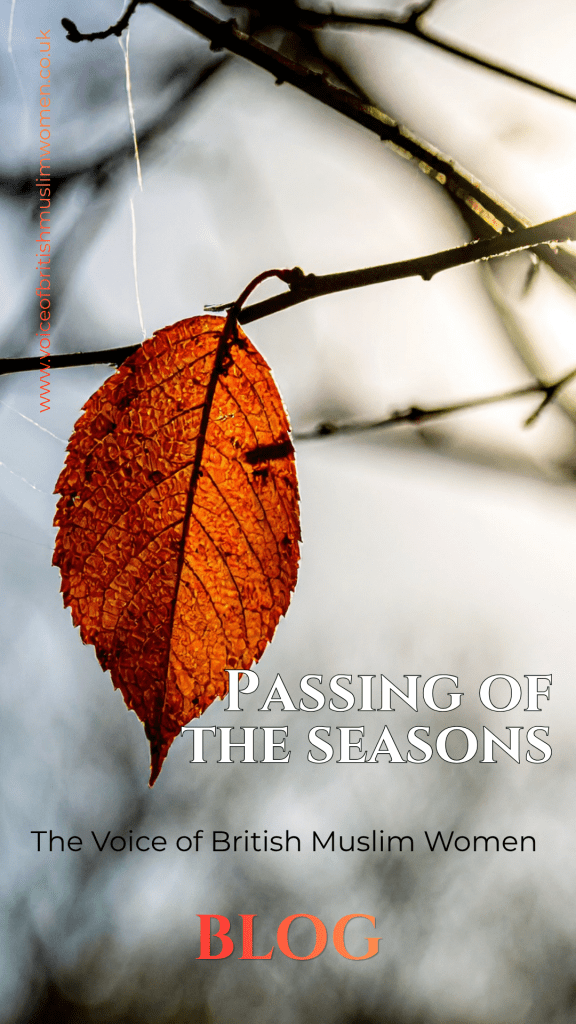
The stark contrast between the verdant, vibrant abundance of summer and the melancholy beauty of autumn as the leaves and blooms fade to sticks and dry twigs leaves an impact on our mental and spiritual development. These patterns are well known, they have been tracked throughout history and are reflected in poetry, song, painting and stories. The seasons mark the passing of the years and our journey through the world. Mental health impacts such as Seasonal Adjustment Disorder (SAD) are now recognised and physical health impacts such as low vitamin D levels can be tackled with relevant interventions.
But what of the spiritual impact of the seasons? What lesson do we learn from the passing of seasons and how can we draw a link between God our Creator and the seasons we witness annually? Firstly, it must be mentioned that the seasons we have in the UK are not universal. In the far northern hemisphere, seasons are even more extreme – darkness for months and hours on end followed by sunlight that stretches for days. In some countries, the oppressive heat of summer is a real challenge and the cooler winter months are of celebration and outdoor relaxation. Even on Earth, no location and no time remains constant and to each time and place there is a blessing and a challenge.
The Holy Quran mentions the cycles of nature again and again as a reference point for believers. The growth and development of nature is presented as an important and significant part of life itself. For example the Quran states:
‘And it is He Who sends down water from the cloud; and We bring forth therewith every kind of growth; then We bring forth with that green foliage wherefrom We produce clustered grain. And from the date-palm, out of its sheaths, come forth bunches hanging low. And We produce therewith gardens of grapes, and the olive and the pomegranate — similar and dissimilar. Look at the fruit thereof when it bears fruit, and the ripening thereof. Surely, in this are Signs for a people who believe.’ [6:100]
The Holy Quran mentions that this analogy is a sign for mankind. But what sign is it sending? Islam is not a dogmatic religion, it is a faith deeply rooted in philosophical contemplation and reflection. Some verses of the Quran are open to different interpretations and the onus is on the reader to ponder and consider the deeper, spiritual meaning. So here, the growth of fruit is not meant as merely a biological event. We can analyse it on several levels. Firstly, fresh fruit is something positive, sustaining, enjoyable, fragrant and pleasing to the senses. It is useful and beautiful at the same time. But that beauty has come from something potentially less positive – rain. Rain can at times be welcome and wanted but (especially those in the UK for the first months of the year perhaps) it can also be something relentless, depressing, dampening spirit and soil. Rain can also bring danger – the risk of flood, drowning, damage, etc. Shelter is usually required from rain – a shield from harm.
So one potential lesson that I draw from the passing of the seasons, and the growth of fruit to a delicious ripened stage, is that good things come from hard times. An event which may seem harsh, difficult and overwhelming, can bring joy and fulfillment. It wont happen in that moment, the change will not occur instantaneously. Improvement can be slow, It can be unseen. It requires patience and nurture. Also, by using the terms similar and dissimilar, we are reminded that success and blessings look different for everyone. What one person has, might be different for another.
This, like the lengthening of days in Spring and the fresh buds which appear at this time of year, is a message of hope for all. The darkness will fade, the challenges will diminish and life will endure and thrive. After every dark day, there is a season of light and growth. From a seemingly barren earth, beauty and abundance can flourish.
This lesson is universal. There is none among us who have not faced a difficulty. There are many of us who may have felt overwhelmed by the challenges they face in life. But this verse instructs us to call to mind that this season too shall pass. Nothing will remain static and from hardship will come ease. That ease may come with growth, with development – the hardship has been the birth place of the good yet to come. At a time when you cannot perceive the future, remember that the blessings of Allah are perhaps merely hidden from view and after the passage of time, you will look back and wonder how you failed to realise that the barren time was only one step on the journey of blessing and growth.
The seasons are not there to merely entertain us or mark the passage of the years. They guide us towards hope and belief in our Lord. That through every season, whether joyful or harsh, God is listening, He is present and a future of blessings awaits.
 Voice of British Muslim Women
Leave a comment