Dr Amtul Kafi Yadullah Bhunnoo, London
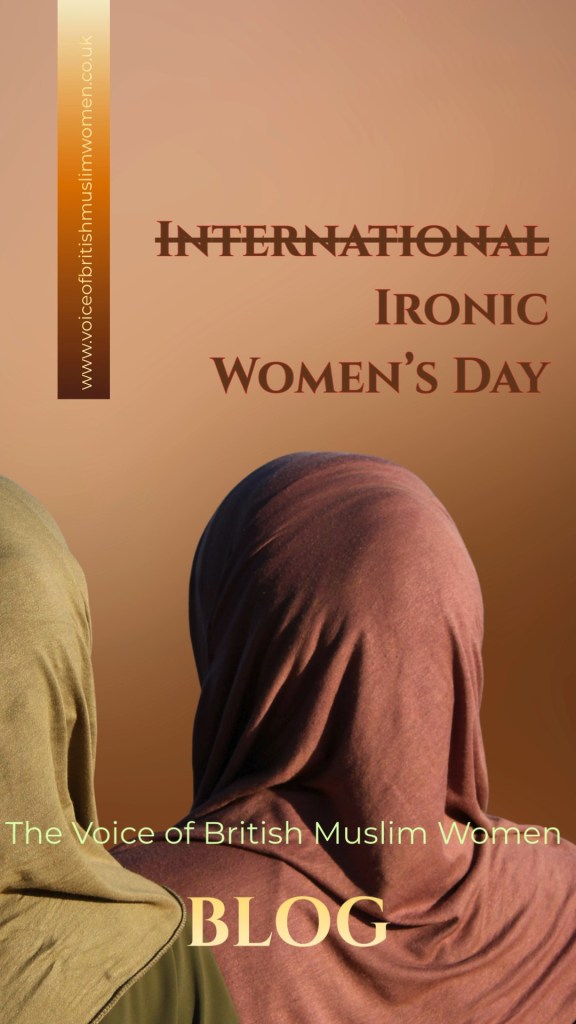
There is a peculiar irony in how the world treats Muslim women. They are everywhere in the news yet never truly heard. Their images fuel debates on integration and Western values. Opinion pieces are written about them, rarely by them. The contradiction? The same society that claims to want to save them shuts every door in their face.
The statistics are stark. Muslim women have the lowest employment rates in the West, are less likely to be hired despite identical qualifications, and are invisible in leadership12. This is not a skills gap. This is discrimination.
Picture this. A Muslim woman spends years earning her degree. She walks into an interview qualified and ready. But the moment the interviewer sees her hijab, she is deemed “not a good fit.” Struck off not for what is in her head, but for what is on it. Studies confirm women who wear the hijab are significantly less likely to receive callbacks than those with identical CVs but no headscarf3.
Now, consider this. The world’s first university – al-Qarawiyyin in Fez – was founded by a Muslim woman, Fatima al-Fihri, in 859 CE4. While Europe was going through the Middles Ages also referred to as the Dark Ages, Muslim women were founding seats of learning. Yet today, their spiritual descendants are denied opportunities to use their degree. How did the inheritor of the world’s first university become the woman most likely to be unemployed in the West?
Turn on the news and she is no longer an applicant but a victim. The familiar narrative: Muslim women are oppressed, controlled by men, unable to think for themselves. They need the West to rescue them. This narrative fuels policies that effectively ban them from public life while politicians pose as women’s champions. How can she need saving yet be denied every opportunity to save herself?
Look at the spaces from which she is excluded. Sports where hijab is a “safety risk,” schools where girls are sent home. Behind each closed door is a woman with dreams who could enrich her community. But we will never know. Because she wears a scarf.
Here is another irony the West forgets. Even as it claims to have liberated women, Western women are still fighting for basic dignities. They are demanding safe spaces to breastfeed without fear of being recorded – a right only recently protected by law5. Women-only spaces are disappearing6. The safety and modesty Muslim women seek is something Western women are also speaking up for.
The West forgets that a mother should not choose between feeding her child and protecting her privacy. These are not foreign concepts. They are universal female needs.
So perhaps there is more that unites us than divides us: safety, dignity, the right to exist in public spaces on our own terms. We have so much to learn from each other.
Yet every so often, a door cracks open. Ibtihaj Muhammad, the Olympic fencer who won a medal while wearing hijab7. The first hijab observing judge Raffia Arshad in the UK8. Slow steps, tiny victories. They prove Muslim women excel when given the chance.
But here is the truth the West must confront. You claim to champion freedom, yet that freedom comes with conditions: remove your clothing, abandon your religious practices. That is not freedom. True freedom means allowing a woman to succeed as she is – hijab and all.
Women have so much to offer as doctors, teachers, entrepreneurs, mothers. A Muslim woman should not be at the back. She should be next to other women, contributing, leading, shaping the world alongside every other women. Not because she has shed her identity, but because she brings it with her.
So what is the answer? Give her equal opportunities. Learn from her. If she looks miserable sometimes, she is human. Imagine the weight of a world that constantly demeans your existence. But those who take time to know her discover she is warm, funny, resilient. In so many ways, just like you.
On this International Women’s Day, I urge all women to do one simple thing: find a Muslim woman to talk to. Not to save her. Not to debate her. Just to listen. As the spiritual head of the Ahmadiyya Muslim Community reminds us: “Islam was the first religion to give women the right to inherit, the right to divorce. Islam emphasises the vast importance of educating girls.”
Islam granted women the full set of rights in every aspect of life more than 1400 years ago. These rights are present in our faith. The opportunities are present in our teachings. All we need now is for the world to stop talking about us and start talking with us.
Open a door. Sit with a Muslim woman. Listen to her story. You might just find that she was never the one who needed saving. We all need each other.
 Voice of British Muslim Women
Leave a comment