Maria Ahmad Tooba, London
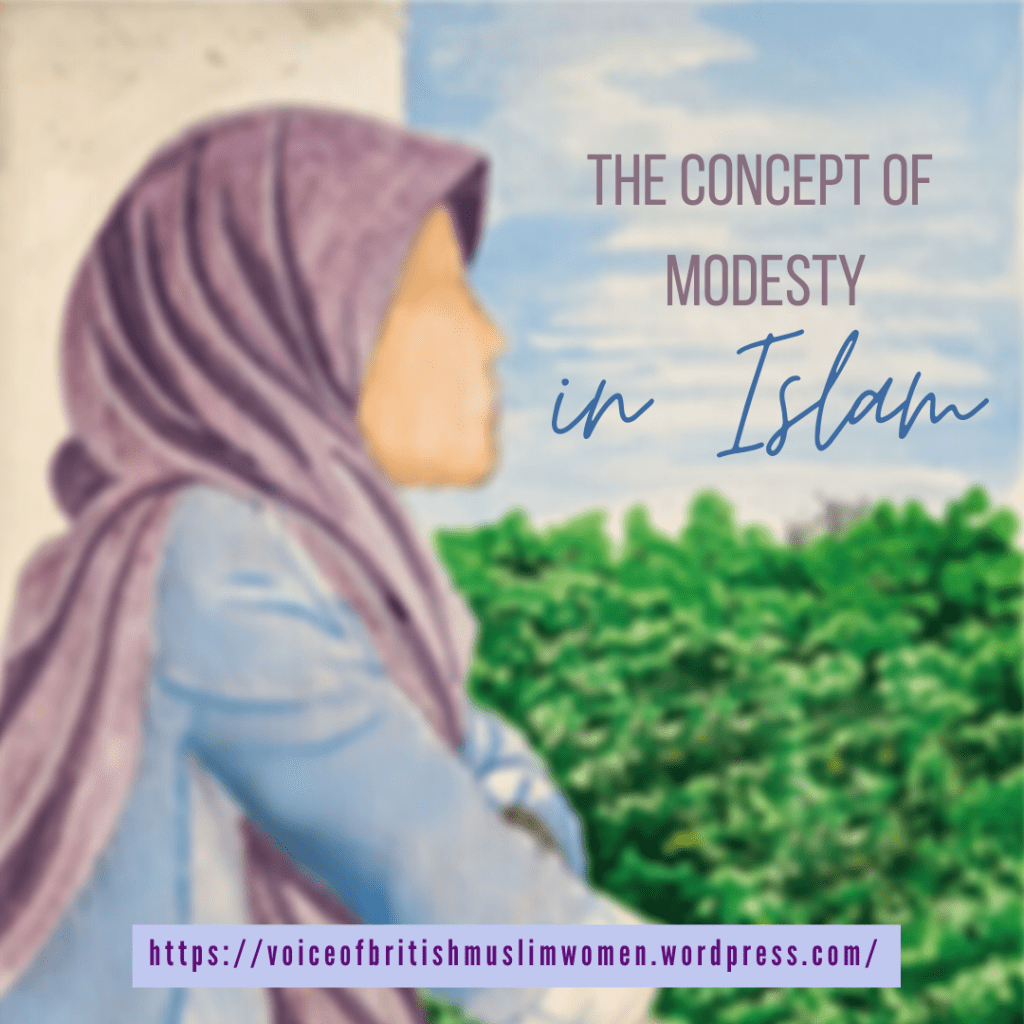
The hijab (veil) alongside long loose coats make up essential pieces in the wardrobe of many Ahmadi Muslim women. Since a young age I have been taught to adhere to this dress code in order to uphold modesty and I have enjoyed doing so. Modesty in Islam is such an important attribute that a Muslim’s faith is incomplete without it. As the Holy Prophet (peace and blessings of Allah be upon him) explicitly stated:
اَلْحَیَآءُ شُعْبَۃُ مِّنَ الْاِیْمَانِ
Modesty is part of faith. (1)
Thus we can ascertain that for Muslims if we are not practising modesty, a part of our faith is missing. It is often alleged that the Islamic injunctions regarding modesty and veiling unfairly target women, however in truth men are not exempt from observing modesty in any way. In fact, the Holy Qur’an first commanded men to ‘…restrain their gaze and guard their private parts…’ (24:31), and then instructed women to do the same.(2) A central point worth noting is that both commandments ultimately serve to protect the honour of women.
At the time of the advent of Islam there existed no rights for women in society. Since its establishment, the teachings of Islam have served to lay the foundations of women’s rights, elevate their social status and guide their spiritual development. Through the injunctions of modesty and veiling Islam protects the dignity of women and provides a mean of physical and spiritual protection. The Islamic veil is not something that is forced upon women, rather it is something that the religion has taught them as a means of safeguard themselves from social malice. It is a commandment of Allah to observe modesty and the Holy Qur’an has made it clear that modesty and veiling are a distinguishing feature of Muslim women so that they would be treated respectfully. In Chapter 33 the Holy Qur’an states:
‘O Prophet! Tell your wives and your daughters and the women of the believers that they should pull down upon them of their outer cloaks from their heads over their faces. That is more likely that they may thus be recognized and not molested. And Allah is Most Forgiving, Merciful.’ (33:60)(3)
We live in a society which indulges in all sorts of indecency and immorality in the name of freedom. All the while questioning the rights and freedoms Muslim women, who choose to cover themselves up in a modest attire, who choose not mix with men and refrain from doing anything prohibited by their religion. But for Ahmadi Muslim women, these choices are a manifestation of liberation. True freedom is when under guidance from her Lord a woman covers her beauty and is assured that no man can cast a malicious glance at her; when she is given equal opportunities to flourish without the shade of men; when she feels protected, and when she knows that she has pleased Allah by fulfilling His commandments and by leaving all that is vain. Modesty is a symbol of honour for Muslim women, it’s something we hold dear and observe with confidence.
A common misconception is that simply wearing a modest dress and covering the hair is enough to fulfil the dues required by the Islamic concept of modesty. In truth modesty is not limited to attire, for both men and women modesty and veiling should extend to include an individual’s character and behaviour. It is in these circumstances that the true purpose of Islamic modesty and veiling can be achieved at a macrosocial level. Muslims aim to achieve the pleasure of Allah and an eternal reward, which according to the Holy Qur’an, can be achieved through modesty and good character:
‘Surely, men who submit themselves to God and women who submit themselves to Him, and believing men and believing women, and obedient men and obedient women and truthful men and truthful women, and men steadfast in their faith and steadfast women, and men who are humble and women who are humble, and men who give alms and women who give alms, and men who fast and women who fast, and men who guard their chastity and women who guard their chastity, and men who remember Allah much and women who remember Him Allah has prepared for all of them forgiveness and a great reward.’ (33:36)(4)
References:
- Social Media: A Believer Shuns all that is Vain, by His Holiness Mirza Masroor Ahmad. Available at URL: [https://www.alislam.org/book/social-media/believer-shuns-all-that-is-vain/]
- The Holy Qur’an with English Translation by Maulawi Sher Ali, Chapter 24 Verse 31-32
- The Holy Qur’an with English Translation by Maulawi Sher Ali, Chapter 33 Verse 60
- The Holy Qur’an with English Translation by Maulawi Sher Ali Chapter 33 Verse 36
 Voice of British Muslim Women
Leave a comment