Laiqa Bhatti, Surrey
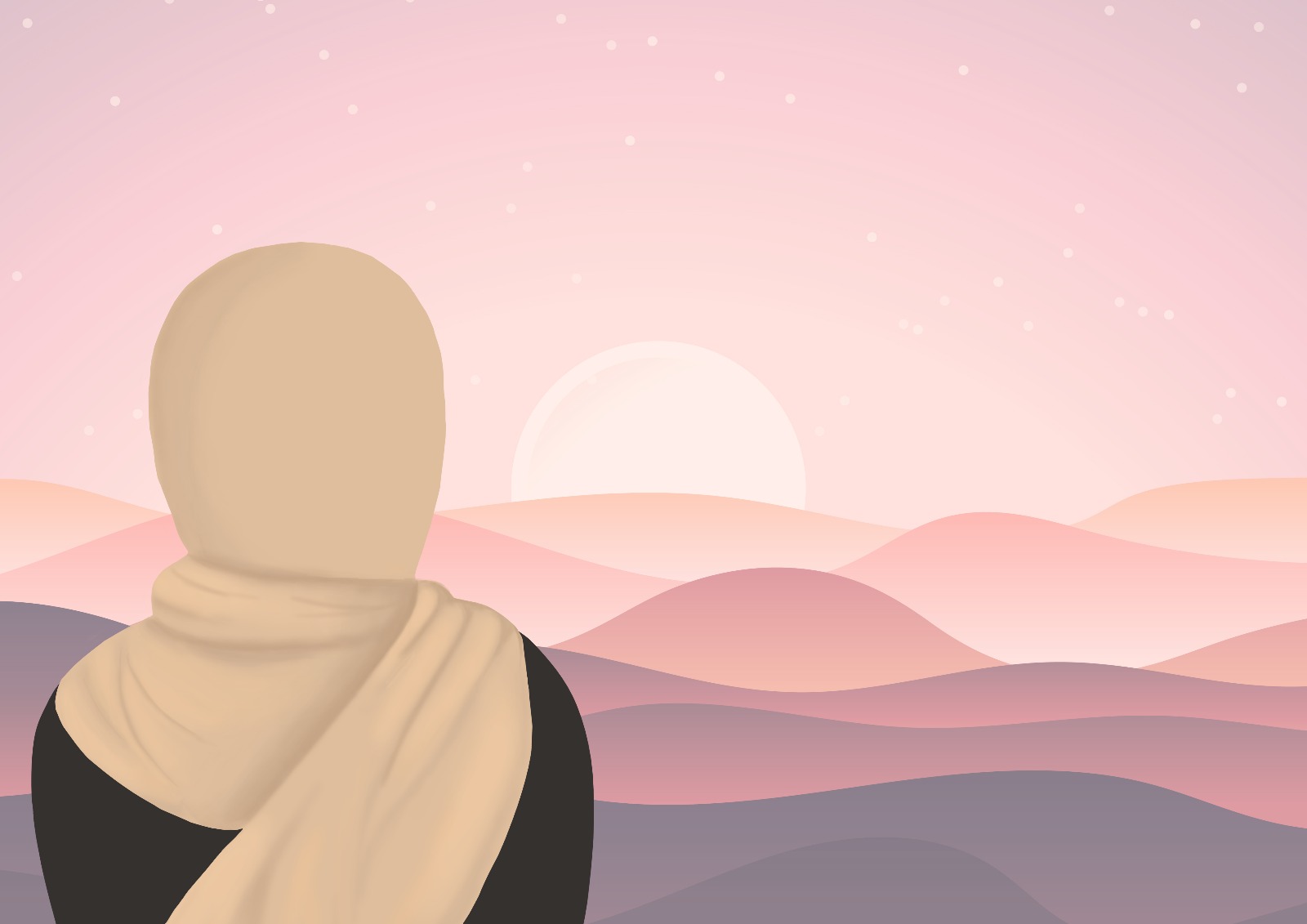
The hijab is a piece of cloth that covers a Muslim woman’s hair and bosom. Yet somehow it seems to become the focal point of many debates particularly when discussing Islam. Many European countries seek to, or have legislated against, the hijab or some form of it. They justify this in the name of integration and freedom from the shackles of this supposedly backward and unnecessary practice.
Throughout my upbringing, modesty has always been an integral part of day to day life. The hijab, however was encouraged from around the age of 12, and I remember being excited at ‘growing up’ and the symbolic link of entering a world of new opportunities I had seen many other girls who were older, in my community do. In fact, I vaguely remember wanting to start at a much younger age but besides wearing it to the mosque, I was told to wait till I was older and able to commit to it fully by understanding it rather than just wearing it momentarily for the fun of it.
Once I entered secondary school, I wore a loose scarf around my neck and by year 9, so around the age of 13, I started wearing it loosely draped over my head. My hijab was worn with great pride yet up until the age of 16- 17 the connection between my faith and my hijab was superficial. I was wearing this piece of cloth over my head because my faith prescribed it for me. This is also the age where my inquisitive mind would bustle with the constant nagging thought of ‘Why?’ Why am I Muslim? Why does it make me so different to those around me? Why do I do the things I do? Why do I wear my hijab?
It was the rite of passage of being a teenager and finding yourself in this vast world of endless possibilities. These nagging questions, made me delve into my faith. I spent a year finding the answer to every why until I was satisfied that my faith, Islam, could provide a ‘because’ to every single one of my ‘why’ in a most satisfactory manner.
Now that I understood the multiple philosophical reasoning behind wearing my hijab, I put it into practice. Now, I would wear the hijab, not because my mother wore it or my friends at the mosque wore it but because I knew there had to be benefits for myself in it. So I observed myself and those around me and found that the hijab for me meant a life polar opposite to a life of one without it.
Rather than becoming ashamed and embarrassed of my modest dress and hijab, I grew to appreciate my true freedom when I was no longer bound to societal expectations especially in terms of how at times women can be objectified in our society. Instead of worrying how I looked, agonising every day over what to wear, pressurising my parents to buy the latest fashion, like many of my friends and peers were going through, I learnt to care less about how I appeared and more about how I behaved. It has given me a true sense of self appreciation, where how I behave, what I have to say matters, not how I look. I am no longer objectified but treated as an equal who has no obligation to dress in a certain manner simply to fit in. Every time I stepped out of the door with my hijab on, the world around me knew I was a Muslim and this is turn led me to always question my actions.
To those who would look at me confused, bemused, amused and now more recently somewhat angry, I’d politely smile back. Yes, I am wearing my hijab, yes it makes me different to those around me but I am liberated. Liberated of any material expectations and focused on my spiritual self. Every time I go out, taking part in any community work, or just extending an every day random kindness to a stranger, I am representing my faith in a positive light. My pride is visible through a simple piece of cloth that lets the world know I am a Muslim and I am proud of it

 Voice of British Muslim Women
Leave a comment